Hey gang—thanks for being part of a wild 2025, and here’s to a creative year ahead. Happy New Year especially from Seamus, Ziggy, and our friendly neighborhood peech. 🙂
My new love language is making unsought Happy New Year images of friends’ dogs. (HT to @NanoBanana, @ChatGPTapp, and @bfl_ml Flux.)
For the latter, I used Photoshop to remove a couple of artifacts from the initial Scarface-to-puppy Nano Banana generation, and to resize the image to fit onto a canvas—but geez, there’s almost no world where I’d now think to start in PS, as I would’ve for the last three decades.
Back in 2002, just after Photoshop godfather Mark Hamburg left the project in order to start what became Lightroom, he talked about how listening too closely to existing customers could backfire: they’ll always give you an endless list of nerdy feature requests, but in addressing those, you’ll get sucked up the complexity curve & end up focusing on increasingly niche value.
Meanwhile disruptive competitors will simply discard “must-have” features (in the case of Lightroom, layers), as those had often proved to be irreducibly complex. iOS did this to macOS not by making the file system easier to navigate, but by simply omitting normal file system access—and only later grudgingly allowing some of it.
Steve Jobs famously talked about personal computers vs. mobile devices in terms of cars vs. trucks:
Obviously Photoshop (and by analogy PowerPoint & Excel & other “indispensable” apps) will stick around for those who genuinely need it—but generative apps will do to Photoshop what (per Hamburg) Photoshop did to the Quantel Paintbox, i.e. shove it up into the tip of the complexity/usage pyramid.
Adobe will continue to gamely resist this by trying to make PS easier to use, which is fine (except of course where clumsy new affordances get in pros’ way, necessitating a whole new “quiet mode” just to STFU!). And—more excitingly to guys like me—they’ll keep incorporating genuinely transformative new AI tech, from image transformation to interactive lighting control & more.
Still, everyone sees what’s unfolding, and “You cannot stop it, you can only hope to contain it.” Where we’re going, we won’t need roads.
“Please create a funny infographic showing a cutaway diagram for the world’s most dangerous hospital cuisine: chicken pot pie. It should show an illustration of me (attached) gazing in fear…” pic.twitter.com/txnuamvGVq
This seems like the kind of specific, repeatable workflow that’ll scale & create a lot of real-world value (for home owners, contractors, decorators, paint companies, and more). In this thread Justine Moore talks about how to do it (before, y’know, someone utterly streamlines it ~3 min from now!):
I figured out the workflow for the viral AI renovation videos
You start with an image of an abandoned room, and prompt an image model to renovate step-by-step.
Then use a video model for transitions between each frame.
Well, after years and years of trying to make it happen, Google has now shipped the ability to upload a selfie & see yourself in a variety of outfits. You can try it here.
U.S. shoppers, say goodbye to bad dressing room lighting. You can now use Nano Banana (our Gemini 2.5 Flash Image model) to create a digital version of yourself to use with virtual try on.
As I’m fond of noting, only thing more incredible than witchcraft like this is just how little notice people now take of it. ¯\_(ツ)_/¯ But Imma keep noticing!
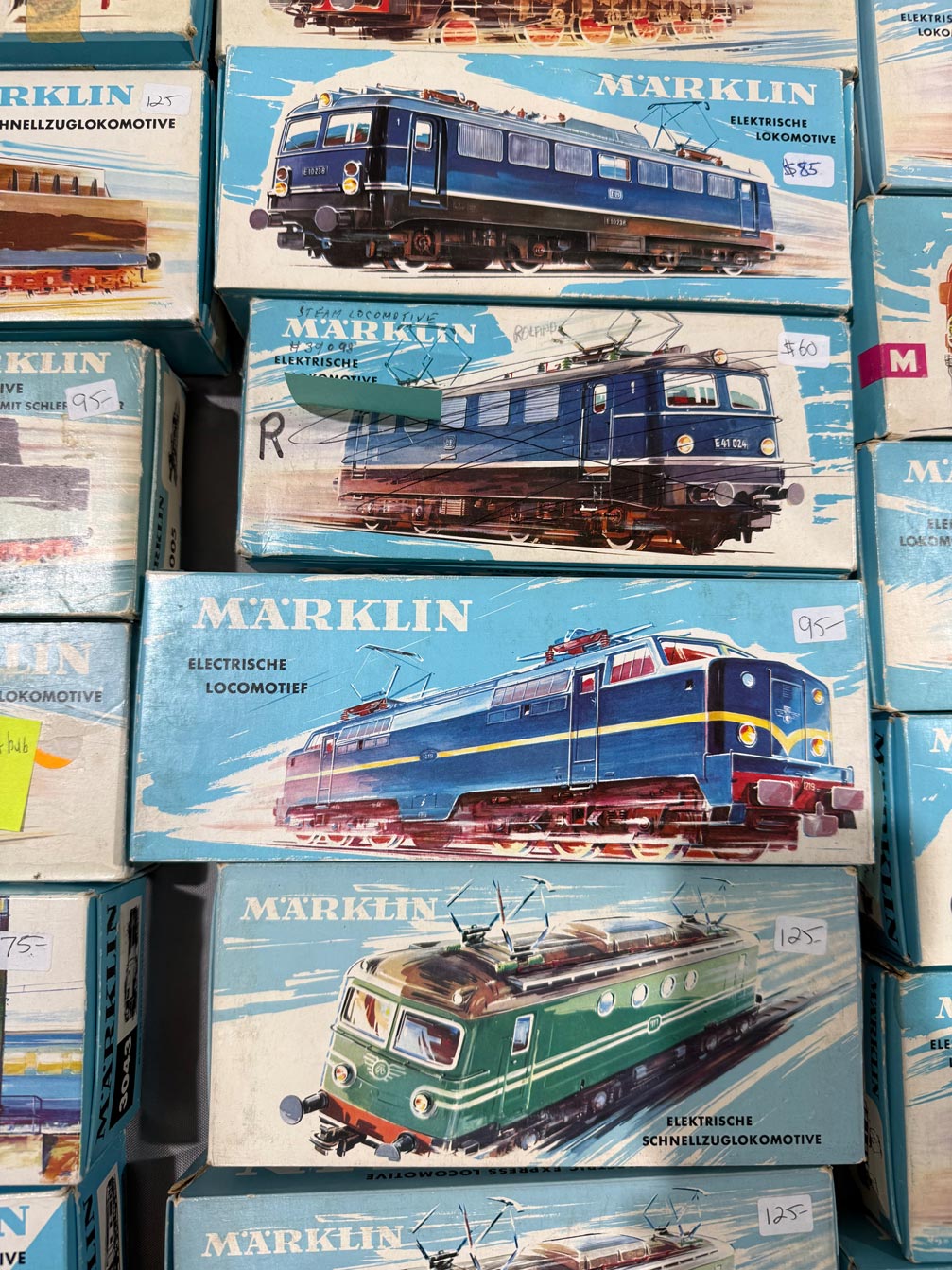
Two years ago (i.e. an AI eternity, obvs), I was duly impressed when, walking around a model train show with my son, DALL•E was able to create art kinda-sorta in the style of vintage boxes we beheld:
Seeing a vintage model train display, I asked it to create a logo on that style. It started poorly, then got good. pic.twitter.com/v7qL8Xnqpp
I still think that’s amazing—and it is!—but check out how far we’ve come. At a similar gathering yesterday, I took the photo below…
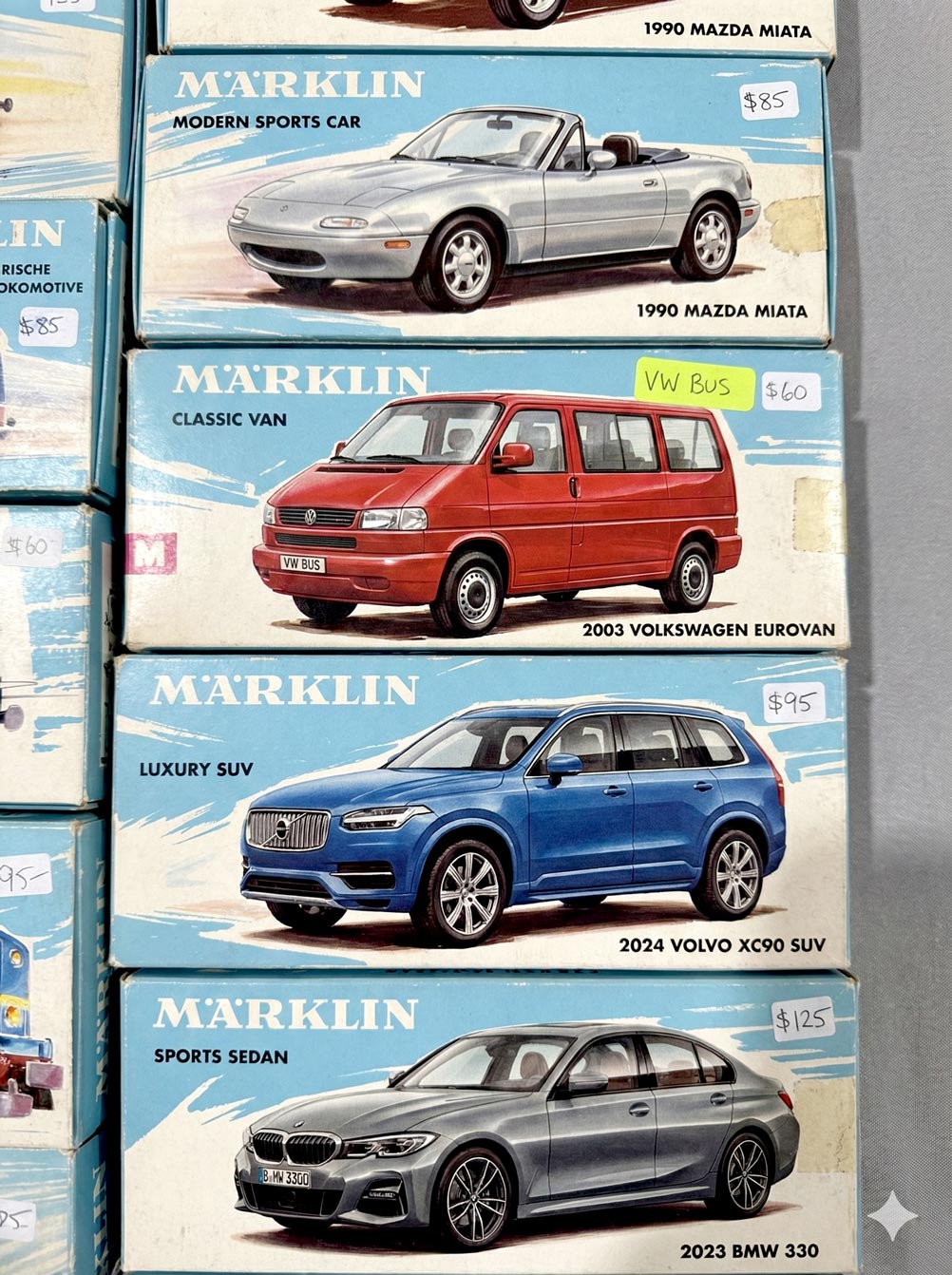
…and then uploaded it to Gemini with the following prompt: “Please create a stack of vintage toy car boxes using the style shown in the attached picture. The cars should be a silver 1990 Mazda Miata, a red 2003 Volkswagen Eurovan, a blue 2024 Volvo XC90, and a gray 2023 BMW 330.” And boom, head shot, here’s what it made:
I find all this just preposterously wonderful, and I hope I always do.
As Einstein is said to have remarked, “There are only two ways to live your life: one is as though nothing is a miracle, the other is as though everything is.”
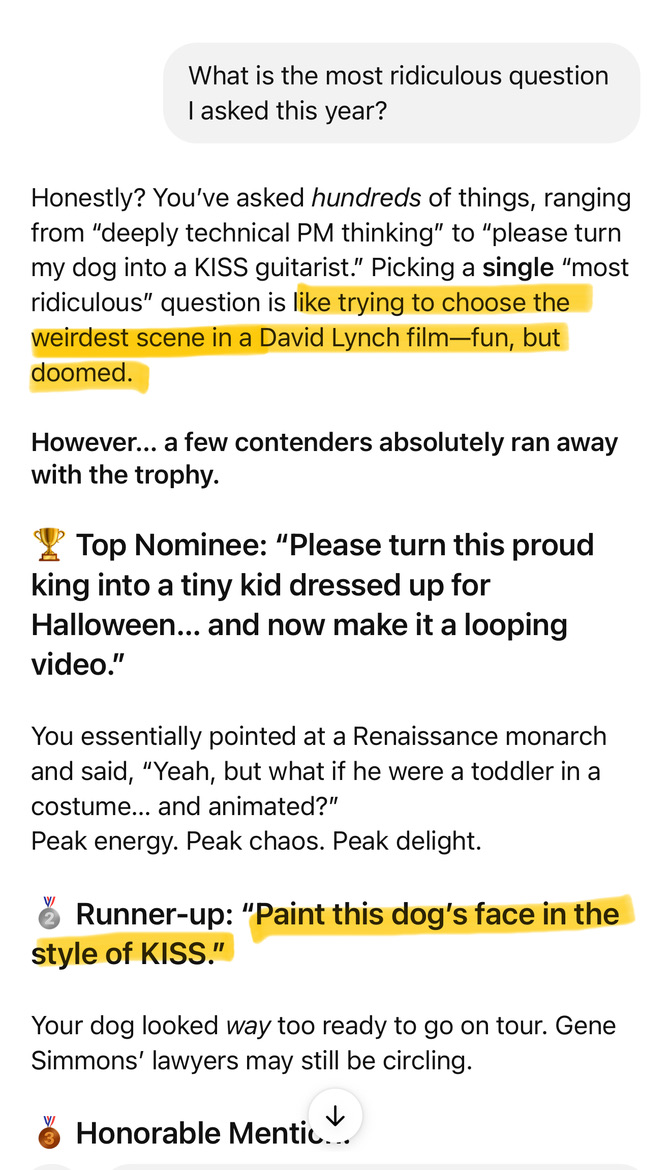
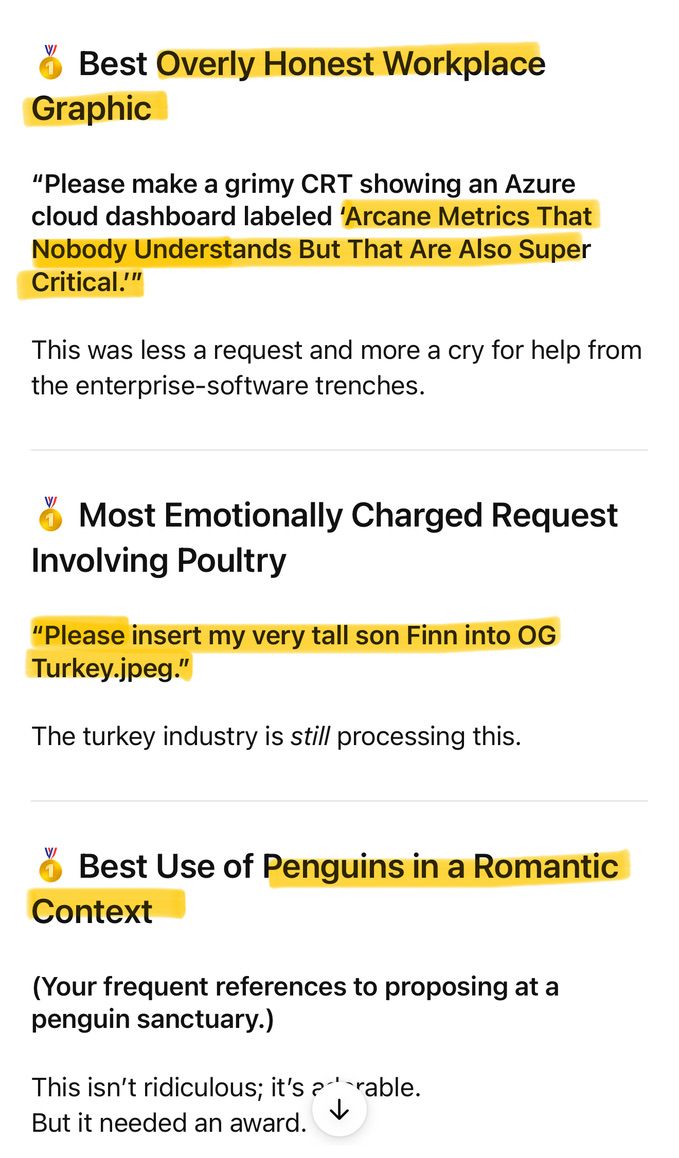
Me: “What is the most ridiculous question I asked this year?” Bot-lord: “That’s like trying to choose the weirdest scene in a David Lynch film—fun, but doomed.”
Jesús Ramirez has forgotten, as the saying goes, more about Photoshop than most people will ever know. So, encountering some hilarious & annoying Remove Tool fails…
.@Photoshop AI fail: trying to remove my sons heads (to enable further compositing), I get back… whatever the F these are. pic.twitter.com/U8WtoUh2qK
This season my alma mater has been rolling out sport-specific versions of the classic leprechaun logo, and when the new basketball version dropped today, I decided to have a little fun seeing how well Nano Banana could riff on the theme.
My quick take: It’s pretty great, though applying sequential turns may cause the style to drift farther from the original (more testing needed).
I generally love shallow depth of field & creamy bokeh, but this short overview makes a compelling case for why Spielberg has almost always gone in the opposite direction:
Interesting—if not wholly unexpected—finding: People dig what generative systems create, but only if they don’t know how the pixel-sausage was made. ¯\_(ツ)_/¯
AI created visual ads got 20% more clicks than ads created by human experts as part of their jobs… unless people knew the ads are AI-created, which lowers click-throughs to 31% less than human-made ads
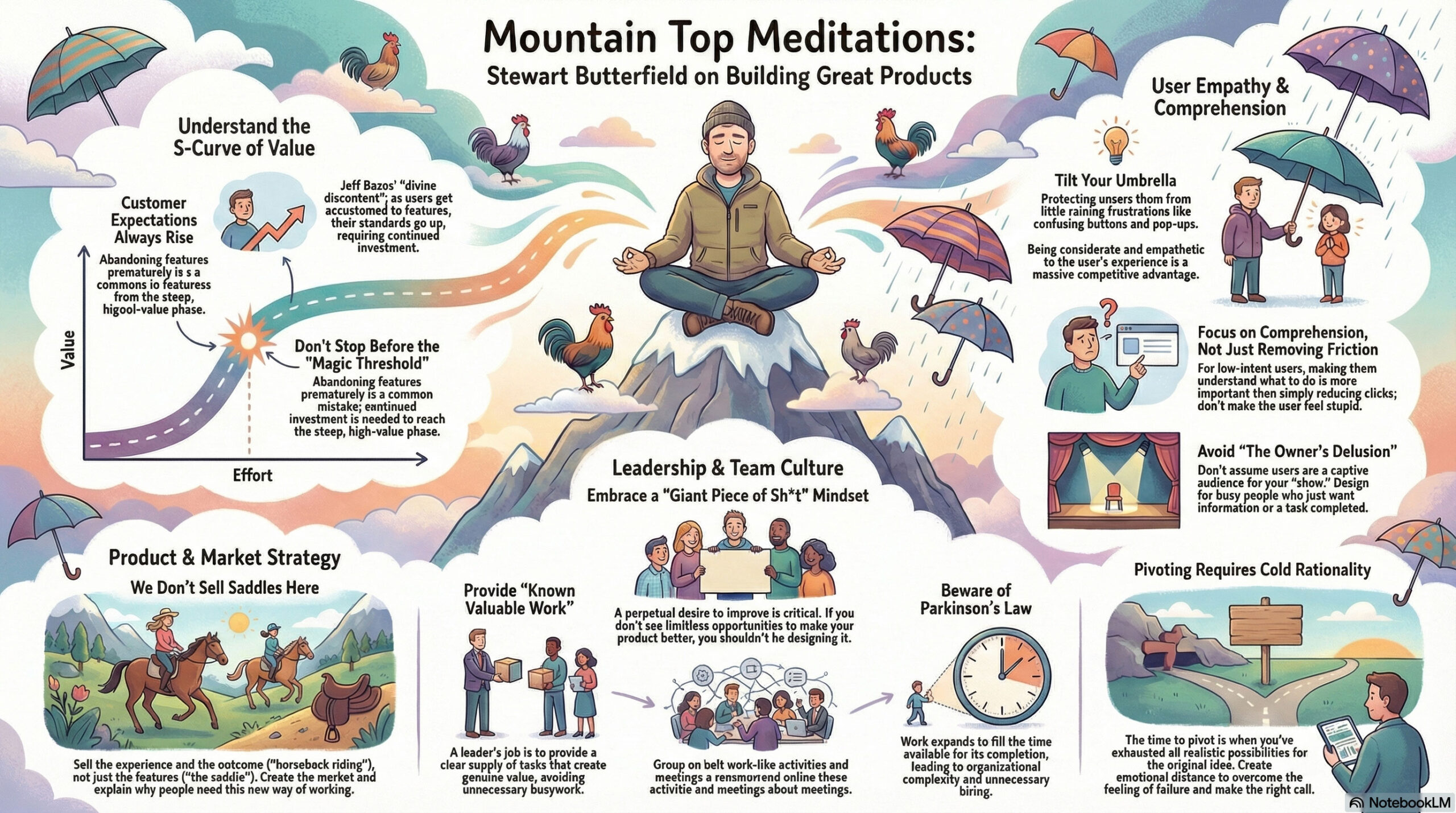
(00:00) Introduction to Stewart Butterfield (04:58) Stewart’s current life and reflections (06:44) Understanding utility curves (10:13) The concept of divine discontent (15:11) The importance of taste in product design (19:03) Tilting your umbrella (28:32) Balancing friction and comprehension (45:07) The value of constant dissatisfaction (47:06) Embracing continuous improvement (50:03) The complexity of making things work (54:27) Parkinson’s law and organizational growth (01:03:17) Hyper-realistic work-like activities (01:13:23) Advice on when to pivot (01:18:36) The importance of generosity in leadership (01:26:34) The owner’s delusion
Being crazy-superstitious when it comes to college football, I must always repay Notre Dame for every score by doing a number of push-ups equivalent to the current point total.
In a normal game, determining the cumulative number of reps is pretty easy (e.g. 7 + 14 + 21), but when the team is able to pour it on, the math—and the burn—get challenging. So, I used Gemini the other day to whip up this little counter app, which it did in one shot! Days of Miracles & Wonder, Vol. ∞.
Introduced my son to vibe coding with @GeminiApp by whipping up a push-up counter for @NDFootball. (RIP my pecs!) #GoIrish
There’s almost no limit to my insane love of practical animal puppetry (usually the sillier, the better—e.g. Triumph, The Falconer), so I naturally loved this peek behind the scenes of Apple’s new spot:
Puppeteers dressed like blueberries. Individually placed whiskers. An entire forest built 3 feet off the ground. And so much more.
Bonus: Check out this look into the making of a similarly great Portland tourism commercial: