“Yes, And”: It’s the golden rule of improv comedy, and it’s the title of the paper I wrote & circulated throughout Adobe as soon as DALL•E dropped 3+ years ago: yes, we should make our own great models, and of course we should integrate the best of what the rest of the world is making! I mean, duh, why wouldn’t we??
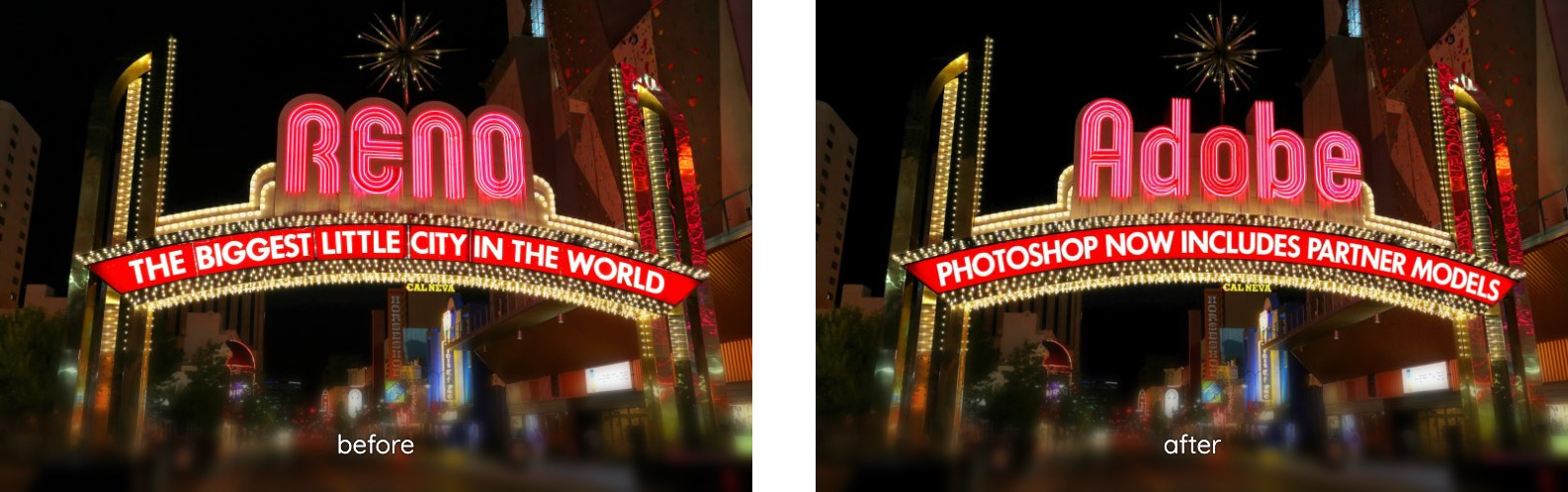
This stuff can take time, of course (oh, so much time), but here we are: Adobe has announced that Google’s Nano Banana editing model will be coming to a Photoshop beta build near you in the immediate future.
Side note: it’s funny that in order to really upgrade Photoshop, one of the key minds behind Firefly simply needed to quit the company, move to Google, build Nano Banana, and then license it back to Adobe. Funny ol’ world…
It’s time to peel back a sneak and reveal that Nano Banana (Gemini 2.5 Flash Image) floats into Photoshop this September!
Soon you’ll be able to combine prompt-based edits with the power of Photoshop’s non-destructive tools like selections, layers, masks, and more! pic.twitter.com/CSLgJYVsHo
Check out this new work from Alex Patrascu. As generative video tools continue to improve in power & precision, what’ll be the role of traditional apps like After Effects? ¯\_(ツ)_/¯
Liquid Logos
With the right prompt, anything is possible with AI video today.
If you want to utilize the full power of Start/End frames (Kling or Hailuo), you can make the first frame empty with tour desired color and describe what happens until the last frame is revealed.
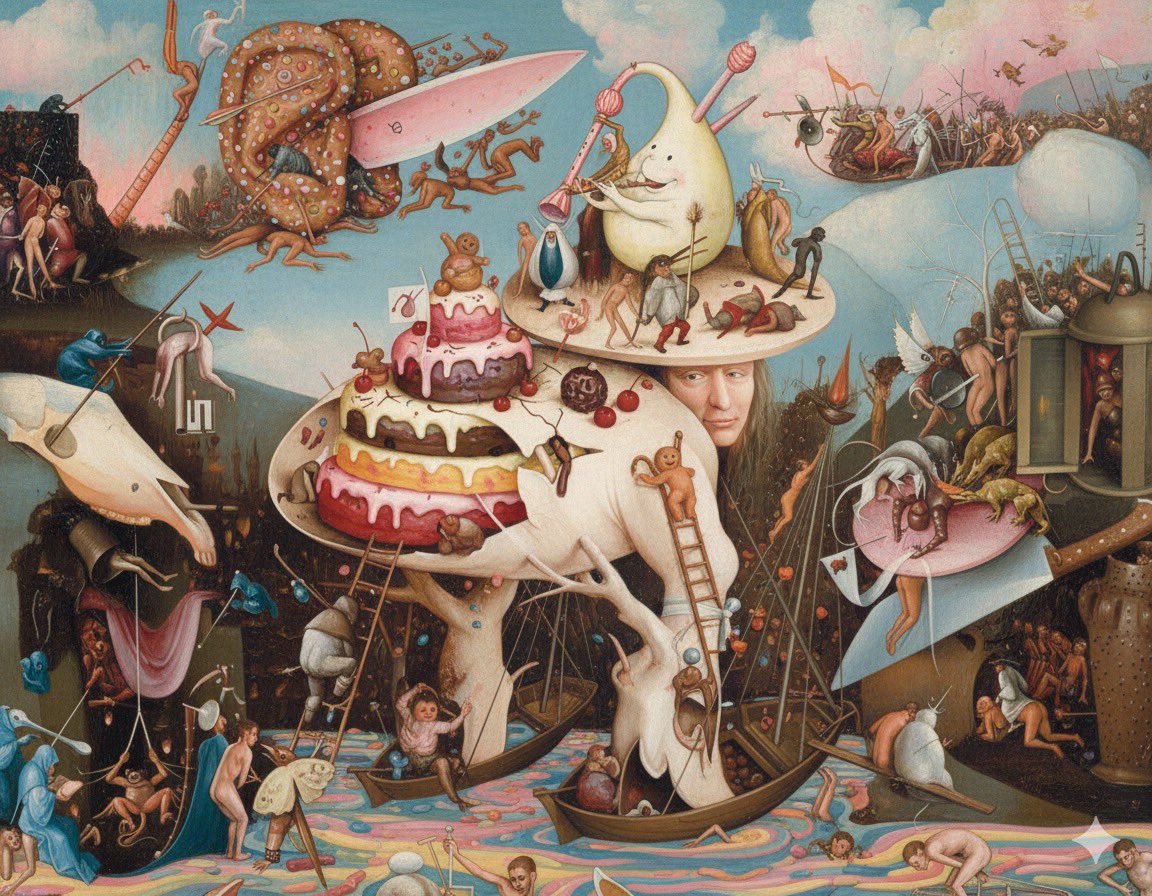
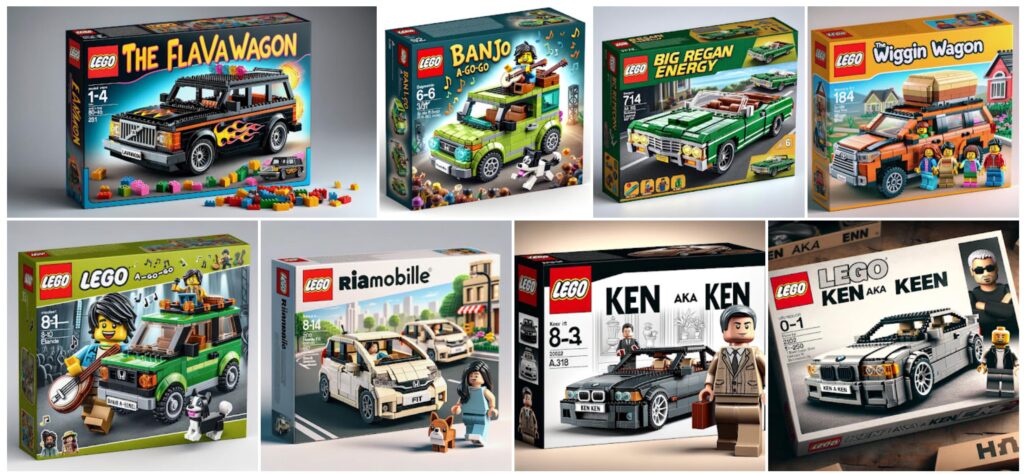
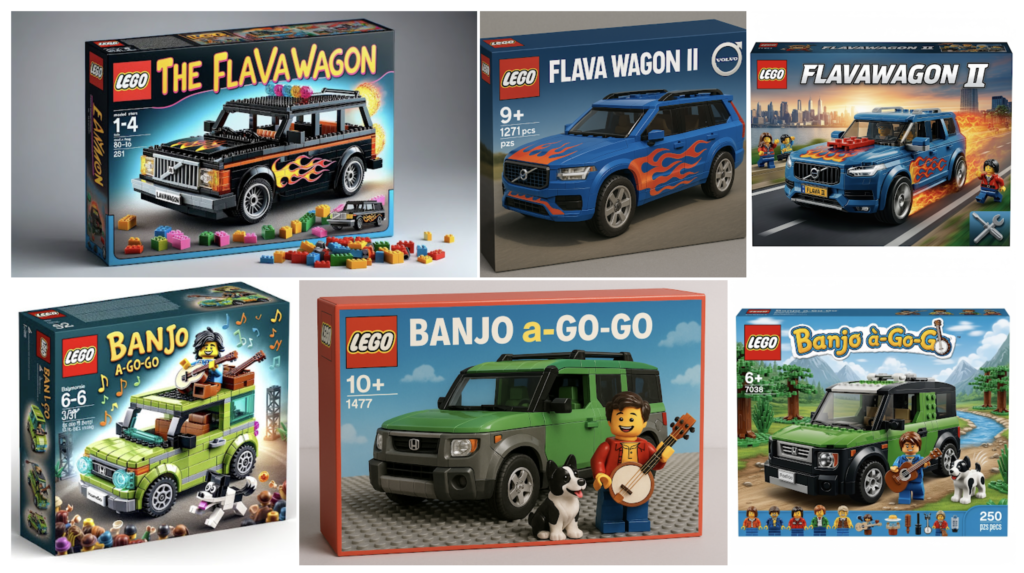
Now that Google’s Nano Banana model has dropped, I felt like revisiting the challenge, comparing results to the original plus ones from ChatGPT 4o.
As you can see in the results, 4o increases realism relative to DALL•E, but it loses a lot of expressiveness & soul. Nano Banana manages to deliver the best of both worlds.
Rob de Winter is back at it, mixing in Google’s new model alongside Flux Kontext.
Rob notes,
From my experiments so far: • Gemini shines at easy conversational prompting, character consistency, color accuracy, understanding reference images • Flux Kontext wins at relighting, blending, and atmosphere consistency
And yes, I do feel like I’m having a stroke when I type our actual phrases like that. 🙂 But putting that aside, check out the hairstyling magic that can come from pairing Google’s latest image-editing model with an image-to-video system:
Want to try a new haircut? Check out this AI workflow:
1. upload a selfie & prompt your desired haircut 2. uses Nano Banana to generate your haircut 3. then Kling 2.1 morphs from old you to new you 4. Claude helping behind the scenes with all the prompts
Nearly a decade ago now (good grief), my entree to working with the Google AI team was in collaborating with Peyman Milanfar & team to ship a cool upsampling algorithm in Google+ (double good grief) and related apps. Since then they’ve continued to redefine what’s possible, and on the latest Pixel devices, zoom now extends to an eye-popping 100x. Check out this 7-second demo:
I’d seen some eye-popping snippets of the Google XR team’s TED talk a few months back, but until now I hadn’t watched the whole thing. It’s well worth doing so, and I truly can’t process the step change in realtime perceptual capabilities that has recently arrived in Gemini:
A recent Time Magazine cover featuring Zohran Mamdani made me recall a super interesting customer visit I did years ago with photographer Gregory Heisler. Politics aside, this is a pretty cool peek behind the curtains on the making of an epic image:
As for the Mamdani shoot, it sounds quite memorable unto itself—for incredibly different reasons:
was reading the photogs substack and ive seen a lot of tricks on set but ive got to say i did not see this one coming lmfao pic.twitter.com/9pHbkIe9z0
“Coming first to Pixel 10 in the U.S., you can simply describe the edits you want to make by text or voice in Photos’ editor, and watch the changes appear. And to further improve transparency around AI edits, we’re adding support for C2PA Content Credentials in Google Photos.”
Because this is an open-ended, conversational experience, you don’t have to indicate which tools you want to use. For example, you could ask for a specific edit, like “remove the cars in the background” or something more general like “restore this old photo” and Photos will understand the changes you’re trying to make. You can even make multiple requests in a single prompt like “remove the reflections and fix the washed out colors.”
Turntable is now available in the Adobe #Illustrator Public Beta Build 29.9.14!!!
A feature that lets you “turn” your 2D artwork to view it from different angles. With just a few steps, you can generate multiple views without redrawing from scratch.
Given that I’m thinking ahead to photographing air shows this fall, here’s a short, sweet, and relevant little tutorial on creating realistic motion blur on backgrounds:
A couple of weeks ago I saw Photoshop trainer Rob de Winter experimenting with integrating ChatGPT’s image model into Photoshop, much as I’d been quietly colluding with Christian Cantrell to do three years ago using DALL•E (long before Firefly existed, when Adobe was afraid to do anything in the generative space).
I suggested that Rob try using Flux Kontext, and he promptly whipped up this free plugin. Check out the results:
From Rob’s site:
This custom-made Flux Kontext JSX-plugin lets you create context-aware AI edits directly inside Photoshop, based on your selection and a short prompt. Your selection is sent to Replicate’s Flux Kontext models (Pro or Max), and the result is placed back as a new layer with a mask, keeping lighting, shadows, and materials consistent.
Watching the face-swapping portion of Jesús’s otherwise excellent demo above made me wince: this part of Photoshop’s toolbox just hasn’t evolved in years and years. It’s especially painful for me, as I returned to Adobe in 2021 to make things like this better. Despite building some really solid tech, however, we were blocked by concerns about ethics (“What if a war criminal got access to this?”; yes, seriously). So it goes.
Maybe someday PS will update its face-related features (heck, for all I know they’re integrating a new API now!). In the meantime, here’s a nice 4-minute tour of how to do this (for free!) in Ideogram:
Wow—well, you sure can’t fault these guys for beating around the bush: video creator Higgsfield has introduced a browser extension that lets you click any image, then convert it to video & create related images. For better or worse, here’s how it works (additional details in thread):
this should be banned..
AI now can clone any ad, change the actor, keep the brand and make it yours
Jesús Ramirez is a master Photoshop compositor, so it’s especially helpful to see his exploration of some of the new tool’s strengths & weaknesses (e.g. limited resolution)—including ways to work around them.
The AI generator—of which I’ve been a longtime fan—has introduced the ability to upload a single image of a person (or cat!), then use it in creating images. It’s hard to overstate just how long people have wanted this kind of control & simplicity.
For a deeper look, here’s a quick demo from the team:
The app promises to let you turn static images into short videos and transform them into fun art styles, plus explore a new creation hub.
I’m excited to try it out, but despite the iOS app having been just updated, it’s not yet available—at least for me. Meanwhile, although I just bit the bullet & signed up for the $20/mo. plan, the three video attempts that Gemini allowed me today all failed. ¯\_(ツ)_/¯
To be honest I’ve never taken a more than passing interest in most birds, and certainly in photographing them, but the insane diversity of those in southern Africa was too much to resist. Here are some of my favorites we spied on our journey through Zimbabwe & Botswana:
Meanwhile we enjoyed visiting Painted Dog Conservation and learning about their tireless efforts to preserved & rehabilitate some of the 6,000 or so of these unique animals that remain in the wild—and that often fall prey to poachers’ snares. Tap/click to see a rather charming little vid:
Even though I got absolutely wrecked for having the temerity to use one of my son’s cute old drawings in an AI project last year (no point in now digging up the hundreds of flames it drew), I still enjoy seeing this kind of creative interpretation:
My mom sent me a 30-year-old drawing…
That I made for her when I was a kid.
Naturally, I animated with Midjourney..
+ It’s not perfect + But it’s awesome + And it captures the innocent chaos + Of my childhood imagination.
Man, am I now gonna splash out for another monthly subscription? I haven’t done so yet, but these results are pretty darn impressive:
To turn your photos into videos, select ‘Videos’ from the tool menu in the prompt box and upload a photo. … The photo-to-video capability is starting to roll out today to Google AI Pro and Ultra subscribers in select countries around the world. Try it out at gemini.google.com. These same capabilities are also available in Flow, Google’s AI filmmaking tool.
You wouldn’t think a hyena might require one of those “Do Not Pet” badges sported by service dogs—but you haven’t met all of our travel companions! :->
Hey friends—we’ve made it home to Cali after a whirlwind trip to Zimbabwe & Botswana. I’ll try to post some observations about the state of photo editing these days, and I’d love to hear yours. Meanwhile, while my body still tries to clue into where & when the heck I am, here are a few small galleries I’ve shared so far:
D’oh—before heading to Zimbabwe & Botswana with my wife to celebrate our 20th anniversary, I neglected to mention that things will be a bit quieter around here than normal. We plan to return to the States next week, and I might share a few posts between now & then. Meanwhile, check out some new friends we made this morning!
My family, having seen so many of my AI-powered image generations over the last 3 years, is just utterly inured to them. So, for my MiniMe’s 16th, I sketched up the patriotic little HO-scale engine we’re getting him, along with a cute large ground squirrel (to quote the Dude, “Nice marmot”).
I feel like this is my micro version of when the world revolted against too-perfect Instagram culture, swinging towards Snapchat & stories, where “rough is real,” and flaws are a feature. In any case, my dude was happy as a clam—and that’s all that matters to me.
For my son’s birthday, I ditched AI and broke out my pen. Felt good to work without a net. pic.twitter.com/TJedYCPWMj
Okay, so this isn’t precisely what I thought it was at first (video inpainting), but rather an creation->inpainting->animation flow. Still, the results look impressive:
How it works:
→ Generate an image in Higgsfield Soul → Inpaint directly with a mask and a prompt → Combine with Camera moves, VFX, and Avatars to turn static edits into living, speaking visuals pic.twitter.com/ENHqdA3WHm
“If you’re into weird cars, forgotten history, and stories that don’t end well, hit that subscribe button.”
I found this piece really interesting, not least because my wife & I are headed to Africa for the first time next week, and I’m eager to learn what kinds of vehicles & roads we’ll experience. Seems like something like the Africar would make a ton of sense in many places:
As I’ve noted previously, Google has been trying to crack the try-on game for a long time. Back in the day (c. 2017), we really want to create AR-enabled mirrors that could do this kind of thing. The tech wasn’t quite ready, and for the realtime mirror use case it likely still isn’t, but check out the new free iOS & Android app Doppl:
In May, Google Shopping announced the ability to virtually try billions of clothing items on yourself, just by uploading a photo. Doppl builds on these capabilities, bringing additional experimental features, including the ability to use photos or screenshots to “try on” outfits whenever inspiration strikes.
Doppl also brings your looks to life with AI-generated videos — converting static images into dynamic visuals that give you an even better sense for how an outfit might feel. Just upload a picture of an outfit, and Doppl does the rest.
Several years ago, MyHeritage saw a huge (albeit short-lived) spike in interest from their Deep Nostalgia feature that animated one’s old photos. Everything old is new again, in many senses. Check out Reddit founder Alexis Ohanian talk about how touching he found the tech—as well as tons of blowback from people who find it dystopian.
Damn, I wasn’t ready for how this would feel. We didn’t have a camcorder, so there’s no video of me with my mom. I dropped one of my favorite photos of us in midjourney as ‘starting frame for an AI video’ and wow… This is how she hugged me. I’ve rewatched it 50 times. pic.twitter.com/n2jNwdCkxF
I’ve heard people referring to the recent release of Google’s Veo 3 as the ChatGPT moment for video generation—that is, a true inflection point at which a mere curosity becomes something of real value. The spatial & character coherence of its output, and especially its ability to generate speech & other audio, turn it into a genuine storytelling tool.
You’ve probably seen some of the myriad vlogger-genre creations making the rounds. Here’s one of my faves:
I’ll note the fact of AI having been involved only because at this point who cares whether AI was involved? We’re happily reaching a plane of maturity where the particular mix of tooling is much less interesting than the vision & vibe.
John Gruber recently linked back to this clip in which designer Neven Mrgan highlights what feels like an important consideration in the age of mass-generated AI “designs”:
I think that was what mattered is that they looked rich, they looked like a lot of work had been put into them. That’s what people latch onto. It seems it’s something that, yes, they should have spent money on, and they should be spending time on right now.
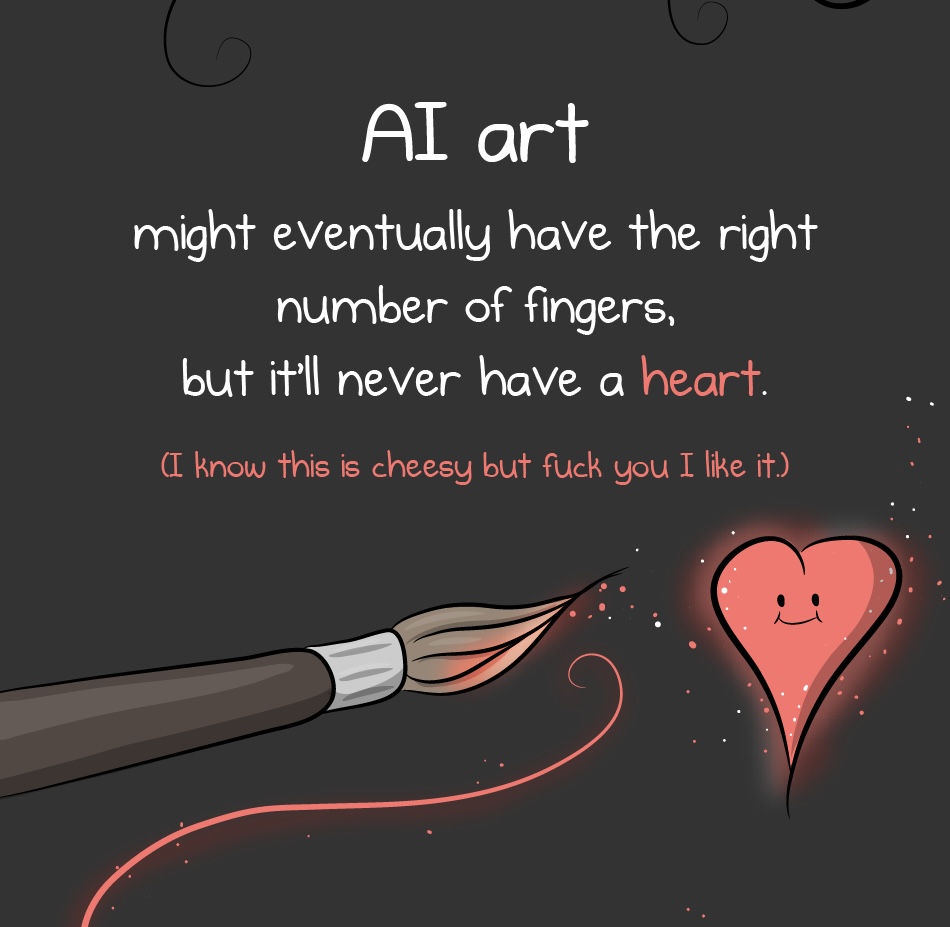
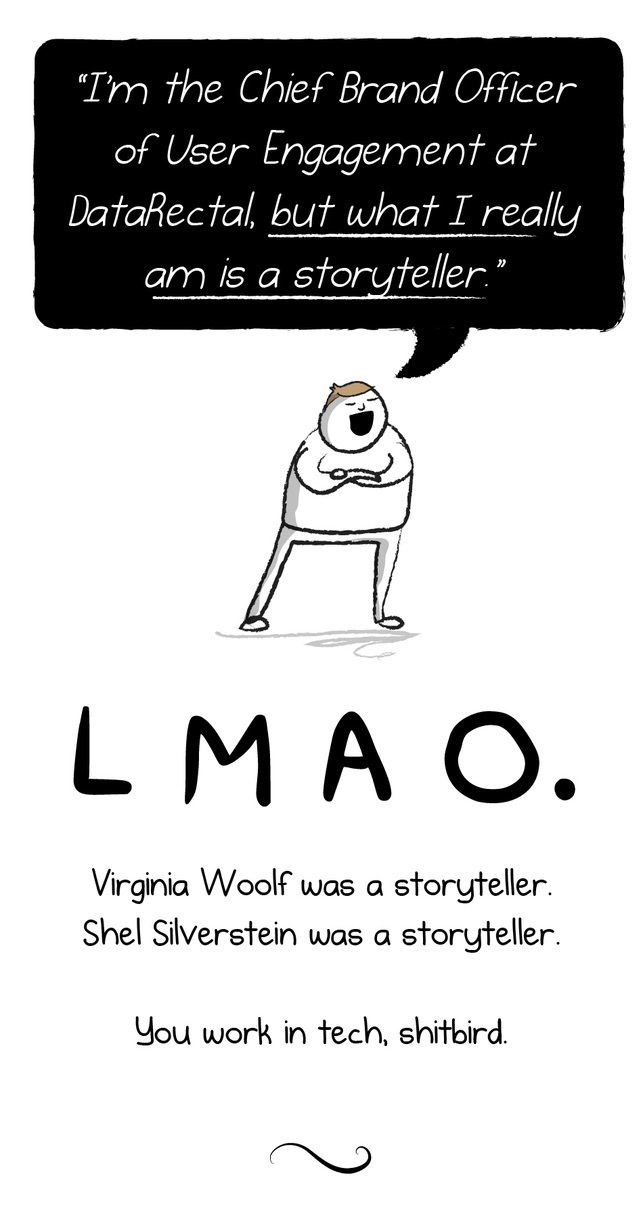
Regardless of what tools were used in the making of a piece, does it feel rich, crafted, thoughtfully made? Does it have a point, and a point of view? As production gets faster, those qualities will become all the more critical for anything—and anyone—wishing to stand out.