Category Archives: Photography

Saturday Photography: Bumblebees to balsa wood

I can’t just talk CS4, now can I? Taking a little break from current software events, here’s a collection of cool recent photographic finds:


Monday Photography: Bright lights, big pixels

Photos in motion; DNG sprouts wheels

  • As you probably don’t need me to tell you, Canon has just announced the 5D Mark II, complete with the ability to record HD-resolution (1080p) video.  This follows on the heels of Nikon’s D90, itself capable of 720p video capture.  My initial thought was that DSLRs capturing video is kind of like dogs walking on their hind legs–not done well (e.g. no autofocus), though interesting to see done at all.  Nikon’s sample videos, however, have gotten me thinking about the possibilities, and film effects pro Stu Maschwitz sees lots of promise.  (He calls Canon’s decision to shoot at 30fps instead of at 24 "almost unbearable," however.)
  • On the other end of the tech spectrum, I’m a big fan of the little Flip video camera.  Now a guy named Reid Gershbein has given a tilt-shift appearance (how, he doesn’t say) to footage from the wee cam.  Hmm–this may motivate me to try applying Lens Blur as a Smart Filter on video using Photoshop Extended.
  • Ikonoskop’s rather potent-looking, weirdly named A-cam dII is, it would appear, first to support DNG for motion capture. "The buzz at IBC is DNG," they write, "so people seem to understand and start to follow our lead in DNG together with Adobe." [Via Scott Sheppard]
  • Interesting video of an SLR: Nikon D3 Shutter Release in Super Slow Motion. [Via Zalman Stern]
  • Photojojo’s got some ideas on making flipbooks from your video content.

Political illustrations

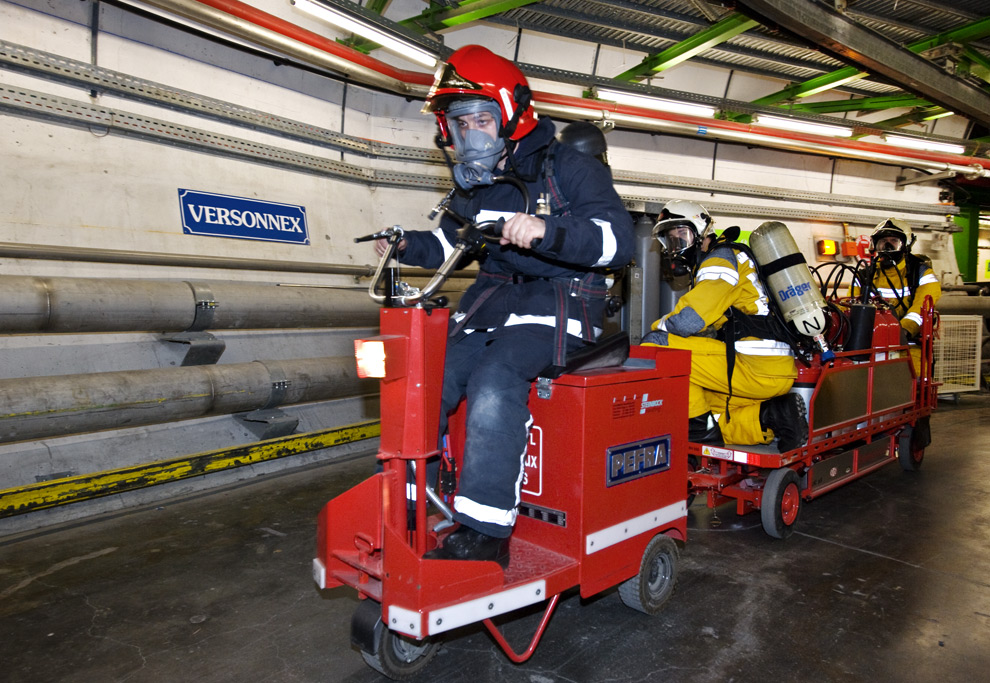
Colliding hadrons, sinking subways, & more

Colliding hadrons, sinking subways, & more

Wednesday Photography: X-rays, fire, and ice

Flickr-flavored craftiness

I’m always intrigued by what people can produce by mining & transforming a big image set:


On non-Flickr but somewhat similar fronts:


A pair of panos: Obama & Olympics

The NY Times has been making more use of interactive panoramas these days, offering a new take on storytelling & dropping the viewer into context in a way that’s hard to match with still images alone:


  • Gabriel Dance and Raymond McCrea Jones captured the electrified atmosphere preceding Barack Obama’s speech last night in Denver.
  • A pano taken from the 10-meter platform in Beijing’s Water Cube features narration from American diver Thomas Finchum.  (Now you know: the Cube is, technically speaking, "ginormous.")  Photo credits go to Bedel Saget, Mike Schmidt, and Gabriel Dance.

A pair of panos: Obama & Olympics

The NY Times has been making more use of interactive panoramas these days, offering a new take on storytelling & dropping the viewer into context in a way that’s hard to match with still images alone:


  • Gabriel Dance and Raymond McCrea Jones captured the electrified atmosphere preceding Barack Obama’s speech last night in Denver.
  • A pano taken from the 10-meter platform in Beijing’s Water Cube features narration from American diver Thomas Finchum.  (Now you know: the Cube is, technically speaking, "ginormous.")  Photo credits go to Bedel Saget, Mike Schmidt, and Gabriel Dance.

Photoshop ephemera

  • PopPhoto’s Debbie Grossman paid a visit to the Adobe Mothership a couple of weeks ago, getting a grand tour from Bryan Hughes & chatting with modest brainiacs like Jeff Chien.  Showing tons of daring, she underwent Kelly Castro’s black & white process–the first woman to do so.  (“That’s because it makes men look tough and women look like hell," she writes.)  [Related/previous: Jeff Schewe’s Visit to Adobe.]
  • At Siggraph last week, Zorana Gee encountered the guys from OnLatte ("You got it right: we make industrial robot machines that do nothing but pretty up tasty beverages") and had them put the Photoshop icon on foam (image two).
  • Photoshop: Helping The Ugly Since 1988. [Spied by Tom Hogarty on the Caltrain yesterday]
  • Slate presents Politishop.  (Is it finally time for us to introduce Brushy the Talking Airbrush ("Hey, pardner, it looks like you’re tryin’ to retouch a photo")?  [Via Adam Jerugim]
  • This isn’t Photoshop-specific, but I noticed that Adobe.com has added a slick new search widget to the site.  Groovy, as previously I’d resorted to using Google (typing "site:http://www.adobe.com" plus a search term into the search field).

PS in NYT, crafty imaging tech, & more

  • In "I Was There. Just Ask Photoshop," Alex Williams of the NY Times writes about the pervasiveness of image manipulation in our culture.  Regarding the manipulation of family photos, I found this bit interesting:

    In India, she said, it is a tradition to cut-and-paste head shots of absent family members into wedding photographs as a gesture of respect and inclusion. "Everyone understands that it’s not a trick," she said. "That’s the nature of the photograph. It’s a Western sense of reality that what is in front of the lens has to be true."

  • Seemingly everyone ever is forwarding me this cool demo showing ideas for enhancing video using still images.  I mentioned the work in June, but it’s worth noting that the developers have been collaborating with Adobe folks.
  • The You Suck At Photoshop crew has been posting new bits, involving the Baldwin brothers, among many other things.

PS in NYT, crafty imaging tech, & more

  • In "I Was There. Just Ask Photoshop," Alex Williams of the NY Times writes about the pervasiveness of image manipulation in our culture.  Regarding the manipulation of family photos, I found this bit interesting:

    In India, she said, it is a tradition to cut-and-paste head shots of absent family members into wedding photographs as a gesture of respect and inclusion. "Everyone understands that it’s not a trick," she said. "That’s the nature of the photograph. It’s a Western sense of reality that what is in front of the lens has to be true."

  • Seemingly everyone ever is forwarding me this cool demo showing ideas for enhancing video using still images.  I mentioned the work in June, but it’s worth noting that the developers have been collaborating with Adobe folks.
  • The You Suck At Photoshop crew has been posting new bits, involving the Baldwin brothers, among many other things.

10,000-year prints, vintage rides, & more

10,000-year prints, vintage rides, & more

Wednesday Photography: Giant HDR, sea creatures, & more

Wednesday Photography: Giant HDR, sea creatures, & more

The DNG Profile Editor: What's it all about?

When we look back at how things changed with the arrival of Lightroom 2, I think the new DNG Profile Editor (presently kind of a sleeper technology) will stand out as transformative.  The technology was largely developed by Eric Chan, a bright young guy on the Camera Raw team (and aspiring photographer).  I’ve always found his explanations lucid and highly readable, so I’m delighted that he’s written a guest blog post on the subject.  Enjoy.  –J.


Hi everyone. My name is Eric Chan and I’ve been a Computer Scientist at Adobe since February, which doesn’t exactly explain how I ended up on John Nack’s blog. [People often wonder how they ended up here…  –J.] Well, John kindly invited me to share some thoughts on the new color profiles for Lightroom 2 and Camera Raw 4.5… "Whoa, hold on there!" you say, "New profiles? What new profiles? I didn’t see any new profiles!" Ahh, that’s because the new profiles are currently undergoing a public beta and aren’t shipping directly with LR 2 and CR 4.5. Instead, they’re available as a separate download from the Adobe Labs web site. Why a public beta? Simply because there have been many changes under the hood, and we want to give folks a chance to try the new profiles and provide feedback before we bake them for final release.


But I’m getting ahead of myself here. Let me backtrack and give you the big picture first. As it turns out, there’s quite a bit more going on here than just a new set of color profiles.

Continue reading

Sunday Photos: White Russians, the Moon, & more

  • Alex Prager mixes mid-century looks with some weird modern twists in her work. On Kitsune Noir Bobby Solomon points out similarities with Philippe Halsman’s wild Dali Atomicus.
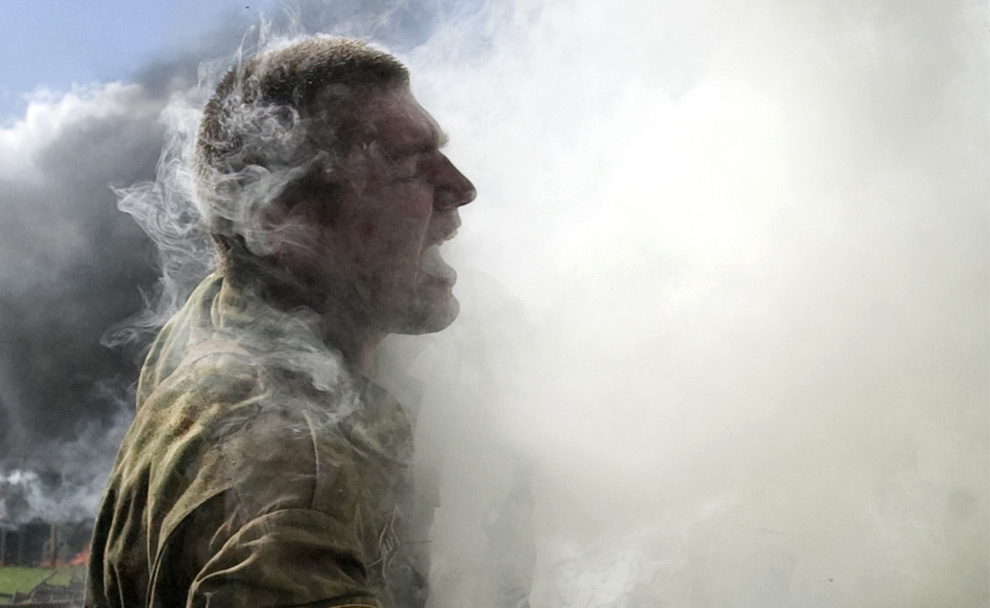
  • Make mine a White Russian: I love this shot of a Belarusian commando shrouded in smoke.
  • Hello, moon: Laurent Laveder uses forced perspective to capture some beautiful Moon Adventures. [Via]
  • Take a good look at my crazy, genocidal face: the Faces of Evil collection invites viewers to stare down some of the most infamous figures of the 20th century.  "The pictures are 1,80m x 2,30m, high-resolution digital images that expose every tiny detail of their faces." [Via]
  • Ten years after I remember sticking her into a comp, the "Everywhere Girl" (stock photo superstar) has a blog.
  • Tangential: I think this is way better than any iPhone.

Sunday Photos: White Russians, the Moon, & more

  • Alex Prager mixes mid-century looks with some weird modern twists in her work. On Kitsune Noir Bobby Solomon points out similarities with Philippe Halsman’s wild Dali Atomicus.
  • Make mine a White Russian: I love this shot of a Belarusian commando shrouded in smoke.
  • Hello, moon: Laurent Laveder uses forced perspective to capture some beautiful Moon Adventures. [Via]
  • Take a good look at my crazy, genocidal face: the Faces of Evil collection invites viewers to stare down some of the most infamous figures of the 20th century.  "The pictures are 1,80m x 2,30m, high-resolution digital images that expose every tiny detail of their faces." [Via]
  • Ten years after I remember sticking her into a comp, the "Everywhere Girl" (stock photo superstar) has a blog.
  • Tangential: I think this is way better than any iPhone.

Where It's At (turntables, microphone optional)

GPS-related photo bits:


  • Bridge geotagger is a free script that "allows you to inspect, set and/or edit GPS data embedded in photos using a Google Maps interface. It uses the embedded Opera HTML engine in Bridge to display Google Maps."  Very cool, though developer Aldo Hoeben describes it as more technology demo than a full-fledged tool.
  • Firing up the Exposure Flickr-browsing app on my iPhone the other day, I discovered the nearest geotagged image is of "¡Chavelas!," described as "A delicious blend of Modelo, lime juice and a shot of tequila in a
    frozen pimp chalice!"  Thank you, intercontinental technology network, for making my neighborhood seem cool for a minute.
  • Previously: Did you know that Lightroom can call up a Google map to show the coordinates in your images?  So, for that matter, can Photoshop Elements.
  • What about images that lack coordinates?  Can a computer accurately guess where something was shot?  That’s the goal of Carnegie Mellon’s IM2GPS project.  Check out this CNET story for a good summary. [Via Doug Nelson]


Off to look for neighborhood pimp chalices on a Friday eve,

J.

War, suicide, fire… and t-shirts

Mid-week photography:


  • Death & destruction:
    • Photojournalist Warren Zinn reflects on the photo that made Army medic Joseph Dwyer famous, and wonders whether it contributed to the troubled vet’s death last month.
    • Kottke features the disarmingly placid image Robert Wiles captured immediately after Evelyn McHale leapt to her death from the observation deck of the Empire State Building in 1947.  (Warhol later made it into a print.)
    • The Big Picture features some spectacular wildfire imagery from recent California blazes.
  • Find giclée paseé? Try printing on grass instead.  (Just don’t ask us to soft-proof it.)  [Via Doug Nelson]
  • Beware sketchy, sketchy photogs.
  • I never saw them while living in snowy Illinois, Boston, or NY, but CA roads are full of stick-on "Botts dots."  They’re now available as part of a complete breakfast.
  • Make mine intermediated: Photo nation.

Charging bulls, lasered Radiohead, and more

iPhone photo apps: Floodgates open

I’m having fun slacking er, conducting important digital imaging research, starting to explore photography-oriented iPhone apps:


  • The free PangeaVR offers amazingly smooth panorama display and navigation.
  • Exposure (paid or ad-supported) promises to let you put "2 billion photos in your pocket," letting you browse Flickr from your handheld.  Groovy bonus point: it’ll show you images geotagged to locations near you.
  • Clowdy promises easy & free photoblogging.


Unfortunately for the capture-and-upload scenario, the camera in the iPhone is pretty rudimentary.  Doesn’t it seem like someone should build a wireless hookup between the phone & dedicated cameras?  That way you could, for example, put an Eye-Fi memory card into your camera of choice, then upload shots via the phone in your pocket?  Maybe that’s a solution in search of a problem, though, or maybe it would just kill your battery.


If you come across any particularly good or noteworthy apps, feel free to post your experiences here.

Skyrockets in flight, Photoshop delight

Gonna grab my missiles/Gonna hold them tight…


Iran’s state media is under fire for apparently digitally adding another missile to a photo of an artillery test.  I like the first comment on the NYT story:  “Clearly someone thought 4 missiles would be 33% more scary than three… or they thought it really tied the composition together, which, I have to say, it actually does.” [Via everyone ever]


Now, excuse me while we get back to work making it even easier for various Great Satans to fake you out.  (Actually, a number of Adobe folks have been collaborating with news agencies on ways to offer greater image authentication, and PBS hosts a 13-minute Nova segment focusing on Dr. Hany Farid & discussing his work with Adobe.)


Updates:


  • Wonkette refers to "the Iranian Revolutionary WoW Photoshoppers Guild." Nice. [Via Russell Brady]
  • I think the Iranian peeps were inspired by the Chinese news agency.
  • Gizmodo challenges readers “to use Photoshop to create some sweet Iranian propaganda, showing their technological advancements that are heretofore unseen.” [Via Fergus Hammond]


PS–To everyone who now has that awful song in their heads, you’re welcome.

Sawed cameras, free falls, and more


  • Wired hosts an interesting Gallery of Sawn-In-Half Cameras.
  • Rapid decents:
    • The Big Picture offers a collection of diving photos (taken at a recent US Olympic qualifying event) unlike any I’ve seen before.
    • In Kabul in Transition, photojournalist Tyler Hicks shows diving platforms used for a far darker purpose.
  • Mitchell Feinberg makes unique art using food.  Many more examples are on his site.
  • 22-year-old photographer Kevin Connolly was born legless and chronicles the world from his unique perspective.  CNET has his story.
  • In Land of the Free, Steve Schofield portrays sci-fi costumers, exploring how people establish a fictional existence to escape the everyday. [Via]
  • Slices in time:
    • "Barbara Probst’s diptych and triptych photos," says the Morning News, "taken at the same time from different cameras and points of view, offer multiple versions of a split second."  It’s a cool project, well worth a look. [Via]
    • The Immodesty multicam system aims to "create an affordable platform which enable all kinds of temporal-spatial experimentation."  In some ways it’s a poor-man’s tool for getting the Matrix "bullet time" effect, as videos on their site show, but the output can be deployed in more interactive ways, too.
  • Reuters hosts some striking images of a Chilean volcanic eruption.

Weekend Photography: HDR to RFK

  • Is Full-Frame the Coming Thing, or is it just a way for uninformed gearheads to show off?  Longtime photography observer Mike Johnston posts some interesting thoughts on the subject.
  • High dynamic range:
    • Our friend Ben Willmore has been traveling the country in his bus, and he’s collected the best of his work at The Best of Ben.
    • Reaktor 1 is a cool, interactive, HDR panorama from Jann Lipka.
    • Norwegian photog Klaus Nordby captured a beautiful fjord sunrise, then posted the high-res image via Photoshop CS3’s Zoomify export feature.
  • History:
    • On June 8, 1968, Look photographer Paul Fusco rode inside the funeral train that carried Robert Kennedy’s body from New York to Washington to be buried beside his brother at Arlington.  On the NY Times site he narrates a slideshow of the work, capturing the Americans who lined the route.  The NYT carries remembrances from that time, and more shots (albeit smaller) are here.  [Via]
    • The Commons, Flickr’s project to host public-domain images, is getting beefed up with the help of The Smithsonian.  The institution added 800 photographs from its collection of 13 million images, and 1,200 more will be added in coming months, according to CNET.  Images shared on the Commons can be tagged by anyone.
    • The Smithsonian posts a small set of turn-of-the-20th-century color autochromes.  Kottke has more info & links to more early color photography.
  • Moving in Stereo:
  • DIY:

JNack: Public Enemy

This is your PM…

This is your PM after being busted following an all-night meth bender…


Lightroom team member Kelly Castro has been continuing his "Exteriors" project (see the whole collection), photographing people at Adobe & elsewhere.  On Monday he got me into the team’s on-site photo studio for a shoot*.  If you’re into this style, check out the info that Kelly & Bryan O’Neil Hughes put together on generating killer B&W using Photoshop + Lightroom.  (Kelly also created a color version of my portrait, in which I have the healthy glow of a Barbecue Pringle.)


In other photo news:


*These little photo projects tend to turn funky, ranging from foolish to beatific to vainglorious. (Take that, Eddie Murphy.)

Punking tourist pix

Here’s a bit of brilliance for your Monday: "The Image Fulgurator is a device for physically manipulating photographs. It intervenes when a photo is being taken, without the photographer being able to detect anything. The manipulation is only visible on the photo afterwards."  In other words, it watches for the flash of someone else’s camera & projects an image onto what they’re photographing.  Check it out in action. [Via]


On a related note, Wired surveys cameras shaped like guns, cameras on guns, and more. [Via Ellis Vener] For other projected guerilla fun, see previous about Applied Autonomy’s “Streetwriter.”

Photos: Smoke, fire, floods, & weirdoes

  • People as smoke: the simple tricks of long exposure produce a ghostly presence.  [Via Marc Pawliger]
  • The Big Picture showcases the wrath of nature:
  • Vintage photo manipulation:
  • Doing their own thing:
    • Phillip Toledano has created a photo essay of phone sex operators–a surprisingly articulate, diverse, and self-aware crew.  (Fair warning: The photos are tame, but some of the blurbs beneath them are fairly frank.) [Via]
    • Return of the ’70s Weirdos features 1978 & 2008 photos of a group of early Microsoft employees.  [Via]  Referring to aging dudes working for MSFT these days, a friend of mine calls the shuttle bus from Seattle to Redmond "The Ponytail Express."
    • You never know what you’ll find via the American Gothic tag on Flickr. [Via]

Photos: Smoke, fire, floods, & weirdoes

  • People as smoke: the simple tricks of long exposure produce a ghostly presence.  [Via Marc Pawliger]
  • The Big Picture showcases the wrath of nature:
  • Vintage photo manipulation:
  • Doing their own thing:
    • Phillip Toledano has created a photo essay of phone sex operators–a surprisingly articulate, diverse, and self-aware crew.  (Fair warning: The photos are tame, but some of the blurbs beneath them are fairly frank.) [Via]
    • Return of the ’70s Weirdos features 1978 & 2008 photos of a group of early Microsoft employees.  [Via]  Referring to aging dudes working for MSFT these days, a friend of mine calls the shuttle bus from Seattle to Redmond "The Ponytail Express."
    • You never know what you’ll find via the American Gothic tag on Flickr. [Via]

Saturday Science: Great photos of Earth, Mars, & beyond

Boston.com’s new feature The Big Picture dispenses with traditional peanut-sized Web photos and showcases great images in the news.  Site designer/developer/writer/photo editor Alan Taylor talks about his brainchild and how it came to be. [Via]  Lately they’ve been harvesting the best photos that billions of tax dollars can buy:


  • The Sky, From Above features gorgeous shots of the Space Shuttle at liftoff, as well as of thunderstorms over the American Midwest and more.  [Via]
  • In Martian Skies, you can view panoramas from Mars and watch dust devils skittering across the Martian landscape.
  • The site also features a retrospective of some of the great images sent back home by the Cassini space probe over the past four years. [Via]

On related notes, apparently the Mars Phoenix rover is broadcasting via Twitter.  Also, NASA’s new space suit design looks rather trim & buff.  I kind of miss the human Jiffy Pop bag look, though.

Saturday Science: Great photos of Earth, Mars, & beyond

Boston.com’s new feature The Big Picture dispenses with traditional peanut-sized Web photos and showcases great images in the news.  Site designer/developer/writer/photo editor Alan Taylor talks about his brainchild and how it came to be. [Via]  Lately they’ve been harvesting the best photos that billions of tax dollars can buy:


  • The Sky, From Above features gorgeous shots of the Space Shuttle at liftoff, as well as of thunderstorms over the American Midwest and more.  [Via]
  • In Martian Skies, you can view panoramas from Mars and watch dust devils skittering across the Martian landscape.
  • The site also features a retrospective of some of the great images sent back home by the Cassini space probe over the past four years. [Via]

On related notes, apparently the Mars Phoenix rover is broadcasting via Twitter.  Also, NASA’s new space suit design looks rather trim & buff.  I kind of miss the human Jiffy Pop bag look, though.

DestroyFlickr! (in a nice way)

The curiously named DestroyFlickr has nothing to do with destruction & everything to do with browsing your images via a desktop application.  Specifically, it’s an Adobe AIR app (essentially a Flash SWF running on the desktop, outside the browser) that lets you navigate your photostream through an attractive, minimalist gray interface.  According to the developer,


With the support of both drag and drop uploading and downloading, posting and saving photos is done in one easy motion. Now you can download the highest resolution version of a photo without having to see it first—just drag a thumbnail to the download menu and the download begins. [Via]


Smoove.

Friday photos: Earthquakes, birds, war, & more

  • Slate features an excellent photo essay from Magnum photographer Thomas Dworzak, Wars: Chechnya and Iraq.  The subject is heavy, but his sardonic narration is well worth a listen.
  • Happening to have a camera on hand during a terrible interruption yielded this rather amazing earthquake wedding photo gallery. [Via]
  • The NYT profiles photographer Nikola Tamindzic.  “He uses long exposures, then shakes the camera while the shutter is still open, causing colors to blur and lights to streak. ‘I’m not recording what is really happening, but it’s something like what the brain is seeing late at night, especially if maybe you’re drunk or very excited,’ he said.” [Via]   On his own site he offers one of the more punishing self portaits I’ve ever seen.
  • Ernesto Scott teaches photography near my old home town & offers lots of lovely bird shots.
  • Raw in the raw: camera tech nerds (or just the curious) may enjoy Looking at a Real NEF Bayer Pattern. [Via Dave Polaschek]
  • Photographer Jay Maisel is offering more intensive NYC-based photography workshops (July 14-18, Sept. 15-19, and Nov. 17-21).  Details are on his site.

Friday photos: Earthquakes, birds, war, & more

  • Slate features an excellent photo essay from Magnum photographer Thomas Dworzak, Wars: Chechnya and Iraq.  The subject is heavy, but his sardonic narration is well worth a listen.
  • Happening to have a camera on hand during a terrible interruption yielded this rather amazing earthquake wedding photo gallery. [Via]
  • The NYT profiles photographer Nikola Tamindzic.  “He uses long exposures, then shakes the camera while the shutter is still open, causing colors to blur and lights to streak. ‘I’m not recording what is really happening, but it’s something like what the brain is seeing late at night, especially if maybe you’re drunk or very excited,’ he said.” [Via]   On his own site he offers one of the more punishing self portaits I’ve ever seen.
  • Ernesto Scott teaches photography near my old home town & offers lots of lovely bird shots.
  • Raw in the raw: camera tech nerds (or just the curious) may enjoy Looking at a Real NEF Bayer Pattern. [Via Dave Polaschek]
  • Photographer Jay Maisel is offering more intensive NYC-based photography workshops (July 14-18, Sept. 15-19, and Nov. 17-21).  Details are on his site.

Fire on the Mountain

As you may have heard, for the last few days large fires have been burning in the Santa Cruz mountains overlooking Adobe HQ.  Quite a few of our colleagues live in or over the hills, but fortunately no one on the Photoshop team has (as far as I know) had to evacuate.  Bryan Hughes didn’t sleep well on Thursday night, I know, with the fire half a mile from his house (shoes on, cats in hand).


I mention it because on my way to an air show yesterday, I snaked through the mountains via some back roads and was surprised to see a very large and imposing Chinook helicopter barreling towards our car, on its way to reload water from the pond right behind me.  I pulled over and popped off a few frames that may be of interest to other aviation nerds.  Included in the set is the swift, violent, helicopter-borne death of a white Jeep Cherokee.  (Yeah, it blowed up real goood!)  Plumes of smoke from the mountains are visible in a few of the shots.


As for other fire-related photography, I honestly can’t compete with things like this.

Sunday photos: Tintypes, timelapses, and more


  • The NYT showcases Tintype Buckaroos.  Robb Kendrick uses archaic gear to capture the enduring lifestyle of cowboys.  “When I’m doing tintypes, everything has to be driving, not flying — all the stuff for the developing is fairly flammable,” he explains.  An interactive feature shows the work while providing narration from the photographer & the article’s author.
  • Pioneering photojournalist (and ICP founder) Cornell Capa passed away on Friday at age 90.  The NYT features a selection of his photos.  I particularly like this one of 7,000 white-shirted Ford engineers.
  • Rob Galbraith points out some great photos in MSNBC’s weekly photo gallery.  I love the frog-hopping image, though it took me a moment to notice the frog. [Via]
  • Matteo Ferrari is doing an interesting little project showing before & after shots of people who drive the same car for a long time. [Via]
  • How does one actually measure the temperature of light?  James Duncan Davidson explains.
  • Timelapses:
    • The New Yorker features a hard-to-watch timelapse video of a man stuck in an elevator for 41 hours. [Via]
    • A new Canon TV spot is composed mostly of stills shot by EOS-1D Mark III cameras.  (Ironically, the ad is for the lower-end Canon Rebel.)
    • CHDK (the Canon Hacker’s Development Kit) is a set of firmware enhancements for a wide range of Canon cameras.  Scripts “provide functionality like motion-sensing photography (which reportedly works for lightning strikes) and unlimited interval time-lapse photography.” [Via Ashish Mukharji]

Miscellaneous interestingness

New fatherhood -> sleep deprivation (yeah, still) -> abandoning any pretense of categorization.  That said, here are a few interesting bits I’ve seen lately:


Take your camera to Tasmania–for free

Photographer Mikkel Aaland, organizer of the recent Lightroom Adventure down under, passed along some attractive info:


Follow in the footsteps of the Adobe Lightroom Adventure Photographers or create your own adventure on the beautiful island of Tasmania!  Here is your chance to win a trip for two to experience the natural beauty of Tasmania first hand.


Roundtrip economy airfare for two on Qantas Airways from one of their North American gateways – Los Angeles, San Francisco or New York City (JFK) – to the island of Tasmania.
Two nights’ accommodation in Tasmania.


What do you have to do?  Just fill out a simple form & you’re good to go.  Good luck & happy inverted shooting.


I’ve been meaning to blog about the Adventure for quite a while, but my draft full-o’-links was lost to my hard drive crash.  Therefore I’ll keep it simple for now and just recommend checking out the beautiful galleries of images captured by the participants.  At the moment I’m grooving on some work from NatGeo photographer Bruce Dale.  (What is this thing?)

Photoshop Express now does Flickr

Woot, there it is!  The subject line pretty much says it all: you can now browse and edit your photos stored on Flickr right from within Photoshop Express.  I’ve just given the integration a whirl and, yep, it works like a charm.  Similar hooks are available for photos stored on Facebook, Photobucket, and Picasa.  (I’ve been uploading just to my own site since becoming, uh, photographically obsessed with one little subject, but maybe this will draw me back to using a service as well.)


As long as we’re on the subject, what’s your take on the importance of integrating services like Flickr into Photoshop?  There’s an obvious appeal in being able to upload right from Lightroom, but should we make it possible to browse & open images on Photoshop.com & co. right from within Photoshop?  (Let’s imagine we could drop in an optional little Flash widget as a browser palette/panel, or maybe enable browsing via Adobe Bridge.)  What about being able to save edits back to the service?  Just curious.

All Ansel, all the time

A number of interesting Ansel Adams-related bits have popped up recently:


  • The NYT features an interactive gallery in which Adams’s former assistant Andrea Stillman discusses the back story on nine of his images.  The story of the naming of "Mt. Ansel Adams" is particularly cool.
  • In what he calls "The most amazing 24 hours of my photo career," photographer Marc Silber trekked around Yosemite with Robert Scoble & Adams’s son Michael.  Afterward they visited the photographer’s darkroom.
  • Frederick Johnson from the Lightroom team joined these guys on the visit.  "Michael is amazing," he writes.  "Turns out we were both in the Air Force! Though he was a General, and I was an enlisted man. It was hard to fight the impulse to call him ‘sir…’"  Frederick posted some photos and short video clips in his Flickr stream.  And oh yeah: if you’ve ever wondered why Photoshop has a lollypop-shaped Dodge Tool (you know, this thing), here’s why.

DNG submitted to the ISO

"The DNG format was supposed to be the future, an open standard for RAW files that every manufacturer could use," writes Digital Photo Pro’s Dave Willis.  "Here’s a look at how the revolution has panned out."  Dave talks with my boss Kevin Connor about the problem that gave rise to DNG:

"Our philosophy on this from the beginning, sort of my personal belief," continues Connor, "is that eventually the proprietary system is just going to break. When we came out with the first camera RAW plug-in, we were supporting around 25 cameras. We’re now supporting more than 175 cameras—in other words, more than 175 different file formats. And when you’re talking about images, people don’t want to keep those images for just five or 10 years. Professional photographers want to know those images will be fine for 50 years—100 years—from now. If you think about the rate of new-camera introductions, how many new file formats will there be? A hundred thousand? It just seems that it’s going to reach a point when it becomes unmanageable."

It’s true that we haven’t yet seen big camera vendors like Canon and Nikon adopt DNG, though maybe we’ll see more progress now that DNG has been submitted to the ISO as a vendor-independent standard.  In any case, the format is providing real-world benefits today:

  • Converting to DNG saves disk space and eliminates the need to use separate sidecar files for raw settings.  (I knocked 1.5GB off the 7GB of photos from our wedding photographer.)
  • Because of these benefits, customer feedback indicates that 40% of Lightroom users are converting to DNG on import.  (It’s a one-click set-and-forget option that’s also available in Adobe Bridge CS3.)
  • DNG lets Adobe support new cameras in older versions of Camera Raw without having to constantly revise and test those versions.  Photographers and use the free DNG Converter (Win | Mac) to process their proprietary raw images to DNG.  The upshot is that we can spend our time building good new functionality instead of updating old software.

[Via]

[Update: I neglected to mention that yes, Adobe will be providing a DNG-viewing codec for Windows Vista, making it possible to view DNG files right within the operating system. Expect this free download to be posted soon. –J.]

Earth from on high

Photographer Michael Poliza* has produced a stunning collection of aerial photos, Eyes Over AfricaHe says, "The images came mostly from an
8-week helicopter expedition from Hamburg to Cape Town.  Lots of
zickzacking over this amazing continent.  The Lightroom beta & LR 1.0 was the tool to work my way thru the 30,000 images."  You can browse more than 200 of the images on his site via Flash (also available in smaller HTML form, both uploaded from LR).  Beautiful
zickzacking indeed.

A few months ago Michael dropped by Adobe to visit with Tom Hogarty and me.  He brought with him his "newest baby," Eyes Over Africa XXL.  He’s not kidding about that suffix:  "It will be the largest coffee table book ever that was purely shot digitally. Almost 50 (!) lbs and definitely huge."  Just for fun, he used his iPhone to call up a satellite image of the same coordinates displayed on one of the pages, then laid the phone on the book.  For further weirdness points, I then snapped a couple of shots of the layout using my iPhone.  (At this point there was a great disturbance in the Force.)

For more Earth from above:

* Coincidentally the elder brother of GoLive founder Andreas Poliza

Old Glory, pourable meat, & more

Old Glory, pourable meat, & more

Tips on using the Lightroom 2 beta

  • Image sharpness is a good thing… except when it isn’t.  Martin Evening shows how to achieve a “‘pseudo’ diffusion printing technique” using the Lightroom 2.0 beta’s ability to go negative on the Clarity slider.
  • To even out exposures across multiple images, Lightroom features a “Match Total Exposures” command. Sean McCormack explains it in this brief video. (I’d listen just for the soothing brogue. ;-))
  • Lightroom lets you create virtual copies of a single image, applying different settings to each.  New in the LR2 beta is the ability to stack virtual copies as layers of a PSD file, letting you composite and blend them in Photoshop. Mucho groovio!
  • Lightroom marketing manager Frederick V. Johnson toted his camera to the Golden Gate Bridge in order to demonstrate handing off a panorama from Lightroom to Photoshop.
  • Ken Milburn touches on the improved Auto adjustment algorithms in LR2.