Last year I posted about the Imaginary Forces’ beautiful, eerie title sequence for Amazon’s Jack Ryan series, and now School of Motion has sat down for an in-depth discussion with creative director Karin Fong. They talk about a wide range of topics, including AI & its possible impacts towards the 1:09 mark.
Here’s a look behind the scenes of the Jack Ryan sequence:
Wes Anderson & crew are back to making delightful miniature worlds, this time for “The Wonderful Story of Henry Sugar.” Enjoy three charming minutes, won’t you?
I’ve been struck by the beautiful, uncanny parallels drawn in the title sequence for Amazon’s “Jack Ryan” series:
It comes as no surprise to learn that they were made by Imaginary Forces, whose work I’ve admired since the 90’s. Check out this great behind-the-scenes piece from creative director Karin Fong & team:
I always love a good dive into learning not just the what and the how of how things—in this case materials from the US federal government—was designed, but why things were done that way.
This video’s all about the briefly groovy period in which Federal designers let it all hang out. From the NASA Worm, to the EPA’s funkadelic graphics, to, heck, the Department of Labor acting like it just took mushrooms, this was an unquestionably adventurous period. And then it stopped. What went wrong?
The Federal Graphics Improvement Program was an NEA initiative started under Richard Nixon, and its brief reign inspired design conventions, logo revamps, and graphics standards manuals. But it was also just a cash infusion rather than a bureaucratic overhaul. And as a result, we only remember toasty Federal Graphic Design, rather than enjoy its enduring legacy.
This is specifically designed to break my brain, isn’t it? Check out Jordan Fridal’s amazing MOCs that imagine World War 2-era aircraft in the style of Star Wars vehicles, all rendered in Lego! The Leia nose art below is just <chef’s kiss>.
One of the great pleasures of parenting is, of course, getting to see your kids’ interests and knowledge grow, and yesterday my 13yo budding photographer Henry and I were discussing the concept of mise en scène. In looking up a proper explanation for him, I found this great article & video, which Kubrick/Shining lovers in particular will enjoy:
“I strongly believe that animation skills are going to be the next big thing in UI design,” says designer Michal Malewicz. Check out his full set of predictions for the year ahead:
Hey friends—Happy New Year! I hope you’ve been able to get a little restful downtime, as I’ve done. I thought it’d be nice to ease back into things with these lovely titles from For All Mankind, which I’ve belatedly started watching & which I’m quite enjoying. The work is by Imaginary Forces, whom I’ve admired ever since seeing founder Kyle Cooper speak in the 90’s:
From the creators:
Lines deviate and converge in a graphic, tactile world that pays homage to the past while hinting at the “what if?” future explored throughout the series. Like the show logo itself, these lines weave and merge to create stylised representations of human exploration—badges, almost— ultimately reminding us of the common thread we share.
The marketers at Heinz had a little fun noticing that an AI image-making app (DALL•E, I’m guessing) tended to interpret requests for “ketchup” in the style of Heinz’s iconic bottle. Check it out:
Whether or not you’re celebrating Christmas, I hope that you’re having a restful day & keeping warm with family & friends. Enjoy a couple of tidbits from the Nacks—including some Lego stop motion…
The 3D and Immersive Design Team at Adobe is looking for a design intern who will help envision and build the future of Adobe’s 3D and MR creative tools.
With the Adobe Substance 3D Collection and Adobe Aero, we’re making big moves in 3D, but it is still early days! This is a huge opportunity space to shape the future of 3D and AR at Adobe. We believe that tools shape our world, and by building the tools that power 3D creativity we can have an outsized impact on our world.
“This emerging tech isn’t perfect yet, so we got some weird results along with ones that looked like Heinz—but that was part of the fun. We then started plugging in ketchup combination phrases like ‘impressionist painting of a ketchup bottle’ or ‘ketchup tarot card’ and the results still largely resembled Heinz. We ultimately found that no matter how we were asking, we were still seeing results that looked like Heinz.”
“Oh my God… Who is this Dave Werner guy and what kind of government lab built him?” So I raved back in 2006 (!). Dave was only a student back then, but his potential was obvious, and I’m so happy he reached out in 2012 and became the designer on my then-team. Now 10 years later, he reflects on his journey in this characteristically charming, inventive little video:
I loved this sharp, salty, and fast-paced takedown of Egypt’s new administrative center, “Where buildings are big and brains are smooth.” Even if you watch just part, I bet you’ll enjoy the design insights & deft turns of phrase.
“Not a single keyframe of animation was set in the making of the title, created by tweaking and bending the alignment knobs of a vintage TV,” writes Anthony Vitagliano. “Instead, I shot it using a vintage Montgomery Ward ‘Airline’ Portable Television, an iPhone, and a patchwork of cables and converters in my basement.”
Check out the results:
See Anthony’s site for high-res captures of the frames.
Hmm—dunno whether I’d prefer carrying this little dude over just pocketing a battery pack or two—but I dig the idea & message:
Once set up on its tripod, the 3-pound, 40-watt device automatically rotates towards the wind and starts charging its 5V, 12,000 mAh battery. (Alternatively it can charge your device directly via USB.) The company says that in peak conditions, the Shine Turbine can generate enough juice to charge a smartphone in just 20 minutes.
This kind of loving madness reminds me fondly of the papercraft animations that Adobe’s Russell Brown used to do for things like the Star Wars intro crawl.
I’ve admired Theo Jansen’s weird & wonderful Strandbeest creations since discovering them some 15 years ago, even getting to meet some in person in SF with the kids in 2016:
Now these creatures are heading into the sky! Check out the vid below, or jump ahead to roughly ~2:35 to see the latest (initial Freudian typo: “lateest,” which I quite like!):
The coaster was constructed from just under 90,000 individual Legos, and Chairudo estimates that it took him about 800 hours to build. The mammoth replica is more than 21 feet long, four feet wide, and almost five feet tall, with a total track length of 85 feet. It’s so big, Chairudo had to rent a separate room just to construct it.
I know only what I’ve seen here, but this combination wireless charger & DSLR-style camera grip seems very thoughtfully designed. Its ability to function as a phone stand (e.g. for use while videoconferencing) while charging puts it over the top.
Clouds & clouds of drones, specifically. It was fun to watch the Verge Aero team wow the audiences & judges alike with their choreographed aerial light show:
I’ve long envied friends like Adobe design director Matthew Richmond & principal scientist Marc Levoy who have the time, equipment, and energy to rig up high-end cameras for videoconferencing. Now Opal promises similar quality for the low (?) price of $299. Check out The Verge’s review, available in robo-spoken form here if you’d prefer:
I know that we’re on a pretty dark timeline sometimes, but these little bits of silly (?) human ingenuity keep me going:
I am excited to share a new study led by Shachar Givon & @MatanSamina w/ Ohad Ben Shahar: Goldfish can learn to navigate a small robotic vehicle on land. We trained goldfish to drive a wheeled platform that reacts to the fish’s movement (https://t.co/ZR59Hu9sib). pic.twitter.com/J5BkuGlZ34
I love hearing creators—especially obsessive ones like Denis Villenueve—discussing the details of their craft. Here the director takes us inside the making of one of Dune’s most memorable scenes:
We use the lockdown for projects that we have always wanted to implement when there are no visitors. This week we broke the world record. A locomotive drives 220 meters of track through the entire Wunderland and strikes several thousand glasses, while playing a medley of well-known classical songs.
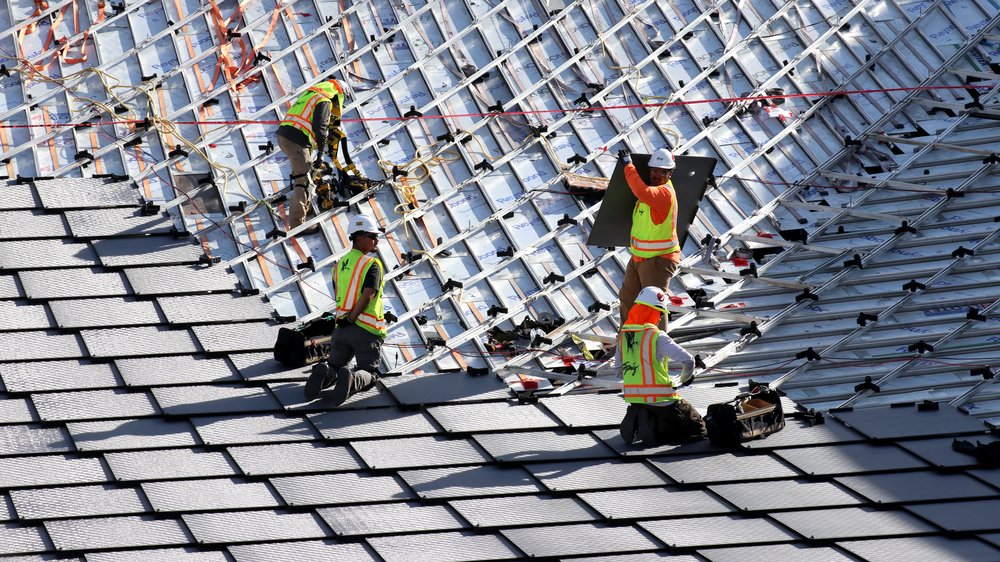
For the last few years I’ve been curiously watching what I affectionately call “nerd terrariums” being erected on Google’s main campus. Now the team behind their unique roof designs is providing some insight into how they work:
These panels coupled with the pavilion-like rooflines let us capture the power of the sun from multiple angles. Unlike a flat roof, which generates peak power at the same time of the day, our dragonscale solar skin will generate power during an extended amount of daylight hours… When up-and-running, Charleston East and Bay View will have about 7 megawatts of installed renewable power—generating roughly 40% of their energy needs.
For about two and a half minutes you’re gonna say, “Dude, this is the most boring content you’ve ever posted; thanks for wasting my time!” And then you’ll see why I posted it. 🙃
My little brother is a trucker, and although I can’t imagine a solution like this working for the rural routes he drives, it’ll be interesting to see how it might work for long-haul highways. Check out the idea (not cheap, but potentially highly impactful):
I plan to highlight several of the individual technologies & try to add whatever interesting context I can. In the meantime, if you want the whole shebang, have at it!
For anyone who’s ever flown a drone but felt insufficiently self-conscious & at risk, let the good times fly!
The Jetson ONE measures 2,845 mm long, 2,400 mm wide, 1,030 mm high, and weighs 86 kg, and is capable of flying a pilot weighing up to 95 kg. It is also collapsible to 900 mm wide when not in use.